Koi Pond Water Parameters: The Complete Beginner's Guide
May 8th 2026

May 8th 2026
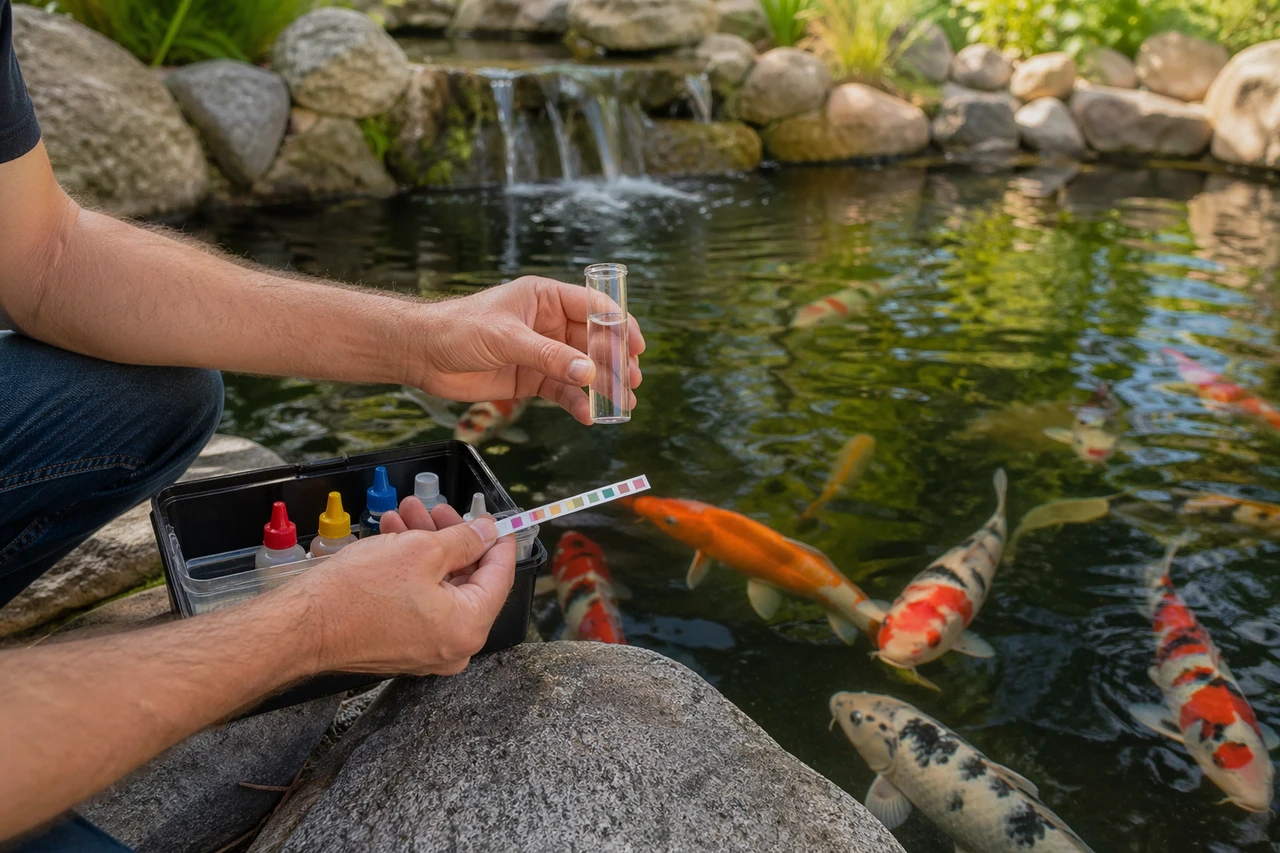
A healthy koi pond doesn’t stay healthy on looks alone. Water can seem clear and still create stress for fish if the chemistry is drifting in the wrong direction. That’s why beginners need to pay attention to the numbers that shape fish health, filtration performance, and overall stability. A few steady habits can help a pond owner avoid bigger issues later, especially once fish waste, overfeeding, warm weather, and debris start to change the water behind the scenes.
New koi keepers often assume water testing is complicated, though it’s really one of the simplest ways to get ahead of pond trouble. pH, ammonia, nitrite, nitrate, temperature, oxygen, KH, and GH all work together. Once you understand what each one does, it gets much easier to spot a problem early and keep your pond in better shape all year. Clear water helps, though stable water matters even more for koi and for the beneficial bacteria that keep the system running.
Water parameters are the readings that tell you whether your pond is safe and stable for koi. They measure things like acidity, waste levels, mineral content, oxygen, and temperature. Each one gives you a different piece of the story. Put together, they show whether your pond is supporting fish health or quietly heading toward stress.
For beginners, the goal isn’t chasing perfect numbers every single day. The bigger goal is to learn what healthy ranges look like and to keep those readings as steady as possible. Koi can handle small shifts better than sudden swings. That’s why consistency matters so much in pond care.
Koi live in the water full time, so every change hits them directly. Poor readings can lead to stress, reduced appetite, sluggishness, increased blood pressure, and trouble with oxygen exchange. Low buffering can allow pH to swing. Waste buildup can cause ammonia and nitrite levels to rise. Warm water can lower available oxygen right when fish and bacteria need more of it.
A stable pond also supports your filtration system. Beneficial bacteria rely on oxygen, alkalinity, and workable conditions to convert fish waste through the nitrogen cycle. If one part of that balance slips, the entire pond can feel it. A beginner who tests regularly usually catches trouble before koi start showing visible symptoms.
Start with the readings that have the biggest impact on fish safety and pond stability: pH, ammonia, nitrite, nitrate, temperature, dissolved oxygen, KH, and GH. Those numbers cover the basics of fish stress, waste control, and water stability.
Ammonia and nitrite deserve close attention because they’re the most urgent danger signs in many ponds. pH tells you whether the water is acidic or alkaline, while KH helps keep that pH from bouncing around. Temperature affects feeding, metabolism, and oxygen availability. GH helps you understand mineral content, and dissolved oxygen tells you whether the pond is supplying enough oxygen for fish and the ecosystem.
Here’s a simple reference chart new pond owners can keep handy:
|
Parameter |
Good Beginner Target |
Importance |
|
pH |
about 7.0 to 8.5, kept steady |
Sudden swings stress koi |
|
Ammonia |
0.0.025 ppm |
Toxic to koi |
|
Nitrite |
0 ppm |
Dangerous to fish blood oxygen transport |
|
Nitrate |
kept low, often under 20 to 40 ppm |
Higher levels add stress and can feed nuisance growth |
|
KH |
roughly 90 to 125 ppm |
Buffers pH and supports biofiltration |
|
GH |
moderate mineral level |
Supports overall mineral balance |
|
Dissolved oxygen |
ideally 6 to 9 mg/L or better |
Critical for fish and bacteria |
|
Temperature |
stable, often near 65 to 75°F for active koi care |
Affects feeding, oxygen, and waste load |
These ranges are helpful starting points, not a reason to make fast corrections. Steady numbers usually serve koi better than dramatic adjustments.
pH measures how acidic or alkaline the pond water is. For koi, a pH around 7.0 to 8.5 is commonly considered workable, though the exact number matters less than keeping it steady. Trouble starts when pH swings quickly from morning to evening or after a rainstorm, water change, algae shift, or KH drop.
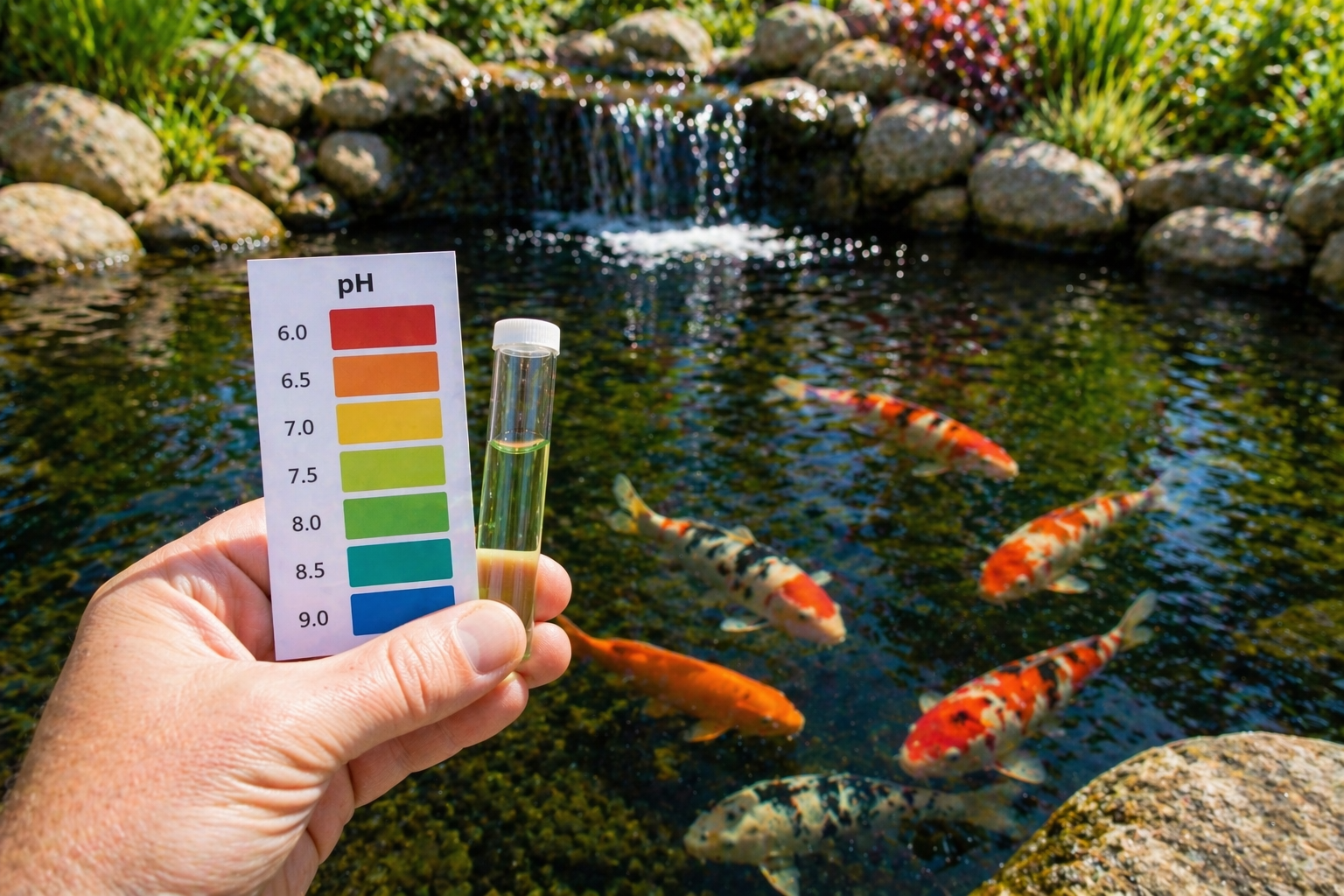
Low KH often sits behind unstable pH. That’s why beginners shouldn’t focus solely on pH. A test may show a decent pH one day, then a sharp drop later if the buffering capacity is weak. A stable pond usually has enough carbonate hardness to help prevent those sudden crashes.
Many beginners don’t realize that city tap water often contains chlorine or chloramine to make the water safe for human use. While that’s helpful for drinking water systems, these chemicals can be harmful to koi, beneficial bacteria, and the overall biological balance inside a pond.
Adding untreated tap water directly into a pond can stress fish, damage gills, and weaken the beneficial bacteria colonies that help process waste and keep water stable. Chloramine is especially important to address because it doesn’t evaporate as quickly as chlorine and can remain active in the water much longer.
Any time you add municipal water during water changes, top-offs, or pond refills, use a quality dechlorinator designed for ponds. This helps protect fish, preserve biological filtration, and reduce the risk of sudden water quality problems. For beginners, dechlorination should become part of every regular pond maintenance routine.
Fish waste, leftover food, and decaying debris all add to the pond’s waste load. Ammonia is the first major concern, and it’s toxic to koi. Beneficial bacteria convert ammonia into nitrite, which is also dangerous. A second group of bacteria then converts nitrite into nitrate, which is far less toxic but still worth keeping under control.
This is why new ponds and overfed ponds can get into trouble fast. If the biofilter isn’t mature enough, or if the fish load and feeding level jump too quickly, the system can’t process waste efficiently. Ammonia rises first, nitrite can follow, and fish start feeling the effects before the water necessarily looks bad. Clear water isn’t always safe water.
Temperature changes nearly everything in a pond. It affects koi metabolism, feeding activity, immune stress, oxygen demand, and the amount of oxygen the water can hold. Warmer water usually holds less oxygen, which can create pressure during the hottest parts of the year. That’s one reason summer can be hard on heavily stocked ponds.
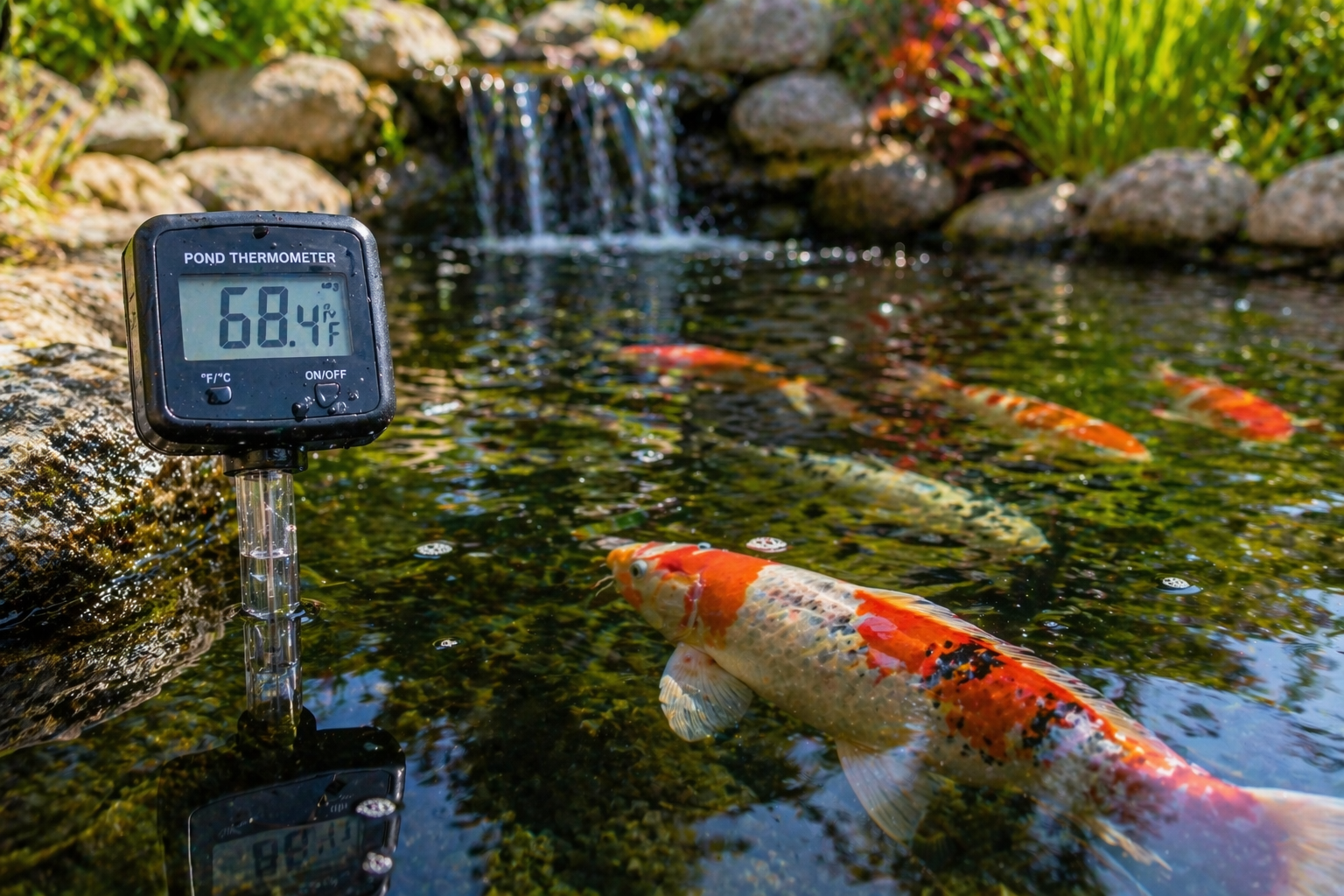
Cold seasons matter, too. Fish become less active, feeding routines shift, and waste processing can slow down. Sudden temperature changes are rough on koi, especially during seasonal transitions. A more stable temperature pattern helps fish adjust without extra stress.
Oxygen is one of the most important parts of pond life. Koi need it, beneficial bacteria need it, and low oxygen can make a bad situation worse in a hurry. Warm weather, heavy feeding, overcrowding, algae die-off, and poor circulation can all reduce oxygen levels.
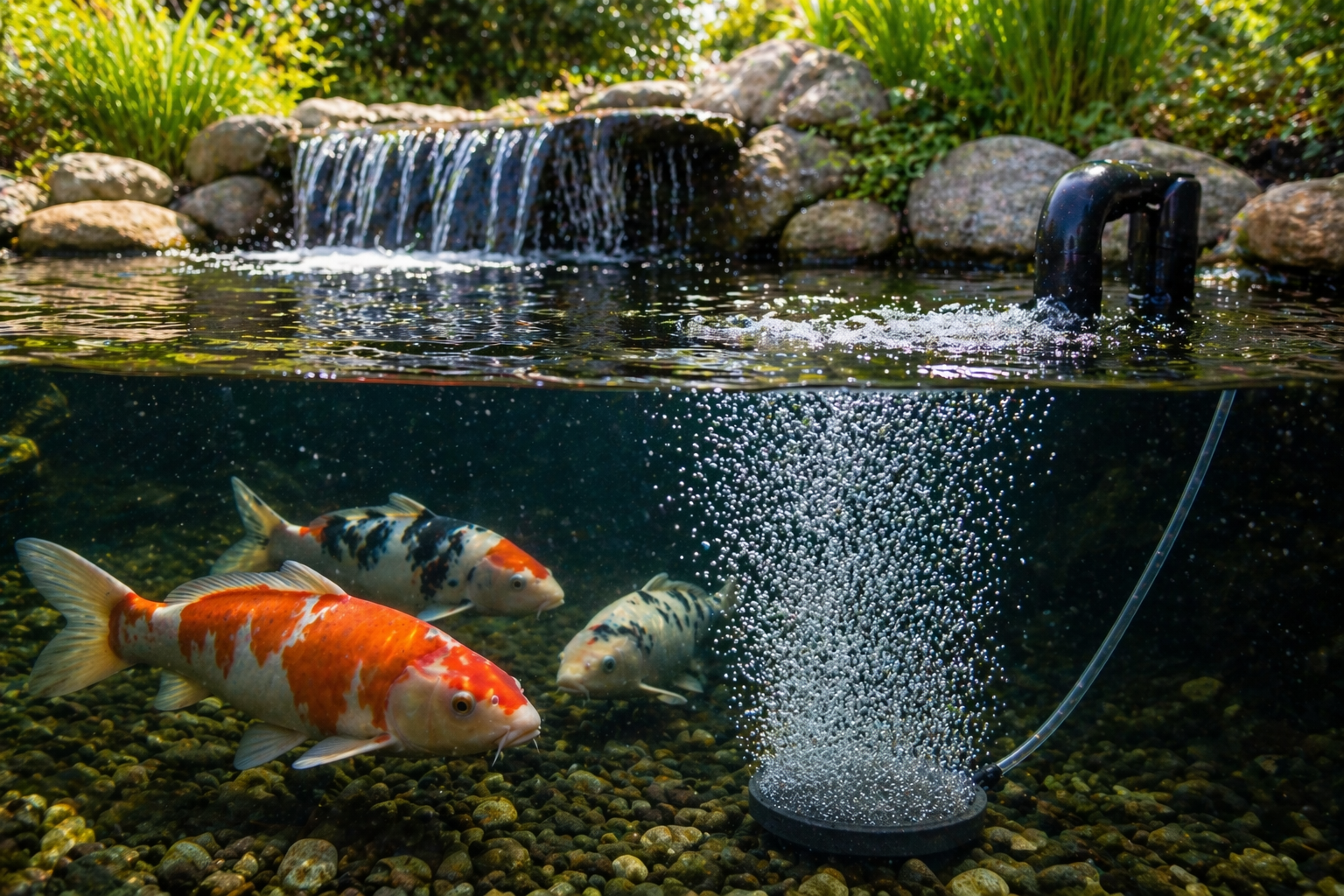
Fish that linger near the surface, gather near waterfalls, or seem unusually sluggish may be reacting to low oxygen. Good aeration, steady circulation, and well-maintained filtration help keep oxygen moving through the pond. For beginners, this is a reminder that water testing and mechanical upkeep go hand in hand.
KH stands for carbonate hardness, and it plays a major role in buffering pH. In simple terms, KH helps keep the water from swinging too far or too fast. It also supports the bacteria that process pond waste. If KH falls too low, a pond can become unstable even if it looked fine a few days earlier.
GH stands for general hardness. It measures dissolved minerals such as calcium and magnesium. GH doesn’t get as much beginner attention as KH, though it still matters because it reflects the broader mineral balance of the pond. Together, pH, KH, and GH tell you a lot about how steady your water really is.
|
Parameter |
Description |
Importance |
|
pH |
pH measures how acidic or alkaline the pond water is. For koi, a pH range of 7.0 to 8.5 is generally considered workable. The exact number matters less than keeping it stable. |
Problems usually start when pH shifts too quickly from morning to evening or after rain, a water change, algae changes, or a drop in KH. |
|
KH |
KH stands for carbonate hardness. It helps buffer pH and keeps pond water from changing too far or too quickly. It also supports the bacteria that break down pond waste. |
If KH drops too low, the pond can become unstable even if it seemed fine only a few days earlier. Low KH is often one of the main reasons pH becomes unstable. |
|
GH |
GH stands for general hardness. It measures dissolved minerals such as calcium and magnesium. |
GH matters because it reflects the pond’s overall mineral balance. Along with pH and KH, it helps show how stable the water really is. |
|
Ammonia |
Ammonia comes from fish waste, leftover food, and decaying debris. It is the first major waste compound to watch in a koi pond. |
Ammonia is toxic to koi and can rise quickly in new ponds, overfed ponds, or systems that cannot process waste efficiently yet. |
|
Nitrite |
Beneficial bacteria convert ammonia into nitrite during the biological filtration process. |
Nitrite is also dangerous to koi and can become a serious issue if the pond’s biofilter is not mature enough or the pond load increases too quickly. |
|
Nitrate |
A second group of beneficial bacteria converts nitrite into nitrate, which is much less toxic than ammonia or nitrite. |
Nitrate is easier for koi to tolerate, though it still should be kept under control as part of overall water quality management. |
|
Water Temperature |
Water temperature affects koi metabolism, feeding activity, immune stress, oxygen demand, and how much oxygen the water can hold. Warm water usually holds less oxygen, while cold weather slows fish activity and waste processing. |
Temperature swings can put extra stress on koi, especially during seasonal changes. Summer can be especially hard on heavily stocked ponds, and steadier temperature patterns help fish adjust more comfortably. |
|
Oxygen |
Oxygen supports koi, beneficial bacteria, and the overall balance of pond life. Levels can drop during warm weather, heavy feeding, overcrowding, algae die-off, or poor circulation. |
Low oxygen can make pond problems worse very quickly. Fish near the surface, crowding around waterfalls, or acting sluggish may be showing signs of low oxygen. Good aeration, circulation, and filtration help keep oxygen levels healthier. |
A newer pond needs more frequent checks than an established one. Weekly testing is a smart starting point for most beginners, especially during the first several months. Extra testing makes sense after adding new fish, after heavy rain, during heat waves, after a filter issue, or any time koi seem off.
Established ponds with consistent routines may not need the same level of constant checking, though many pond owners still prefer a weekly or every-other-week schedule. The real value is pattern tracking. Once you record readings over time, you start seeing what’s normal for your pond and what deserves attention.
One of the most common mistakes is waiting until fish look stressed before testing. Another is focusing only on pH and ignoring KH, ammonia, or nitrite. Some pond owners also assume clear water means healthy water, which can lead to missed problems under the surface.
Overfeeding is another issue that catches beginners off guard. More food means more waste, and more waste means a heavier load on the filter. Fast corrections can also create problems. Large, sudden changes in water chemistry may add stress rather than solve it. A slow, measured response usually works better for koi.
Start with the basics. Retest the water to confirm the result. Check the filter, pumps, and aeration. Reduce or pause feeding if ammonia or nitrite is present. Remove obvious debris. Partial water changes can help, though they should be done carefully with properly conditioned water so the pond doesn’t swing too quickly.
It also helps to think about the cause instead of only the symptom. Did you add fish recently? Has the weather changed? Did the filter clog? Has debris built up? A steady routine fixes more pond issues than emergency reactions alone. Fast action matters during a spike, though calm, step-by-step corrections usually protect koi better than dramatic changes.
A strong routine doesn’t need to be complicated. Pick one day each week for testing. Write down the results. Check fish behavior during feeding. Keep an eye on the flow from the pump and filter. Remove leaves and decaying debris before they break down in the water. Increase attention during summer heat, heavy rain, and seasonal shifts.
That kind of routine gives beginners something even better than guesswork. It gives them a baseline. Once you know your pond’s usual pattern, it’s much easier to catch small changes before they turn into fish stress, algae trouble, or filtration issues. Regular koi pond testing works best as a habit, not as a last resort.
Building a better routine starts with consistency, though you don’t have to manage every test and adjustment on your own.
Fitz’s Fish Ponds offers professional pond water testing services to help you stay ahead of hidden issues before they turn into fish stress, algae growth, or filtration problems.
Our team can help you understand what’s happening in your pond, track changes over time, and keep your water in a healthier range for your koi.
Learn more about our pond water testing services and get expert support for a cleaner, more stable pond. Talk to An Expert Online or call (908) 420-9908.
Test pH and write it down. Test ammonia and nitrite next, as those numbers can indicate urgent trouble. Check nitrate to get a better sense of the waste load over time. Test KH to determine whether your pond has sufficient buffering capacity. Review the temperature and note weather patterns, especially in hot months.
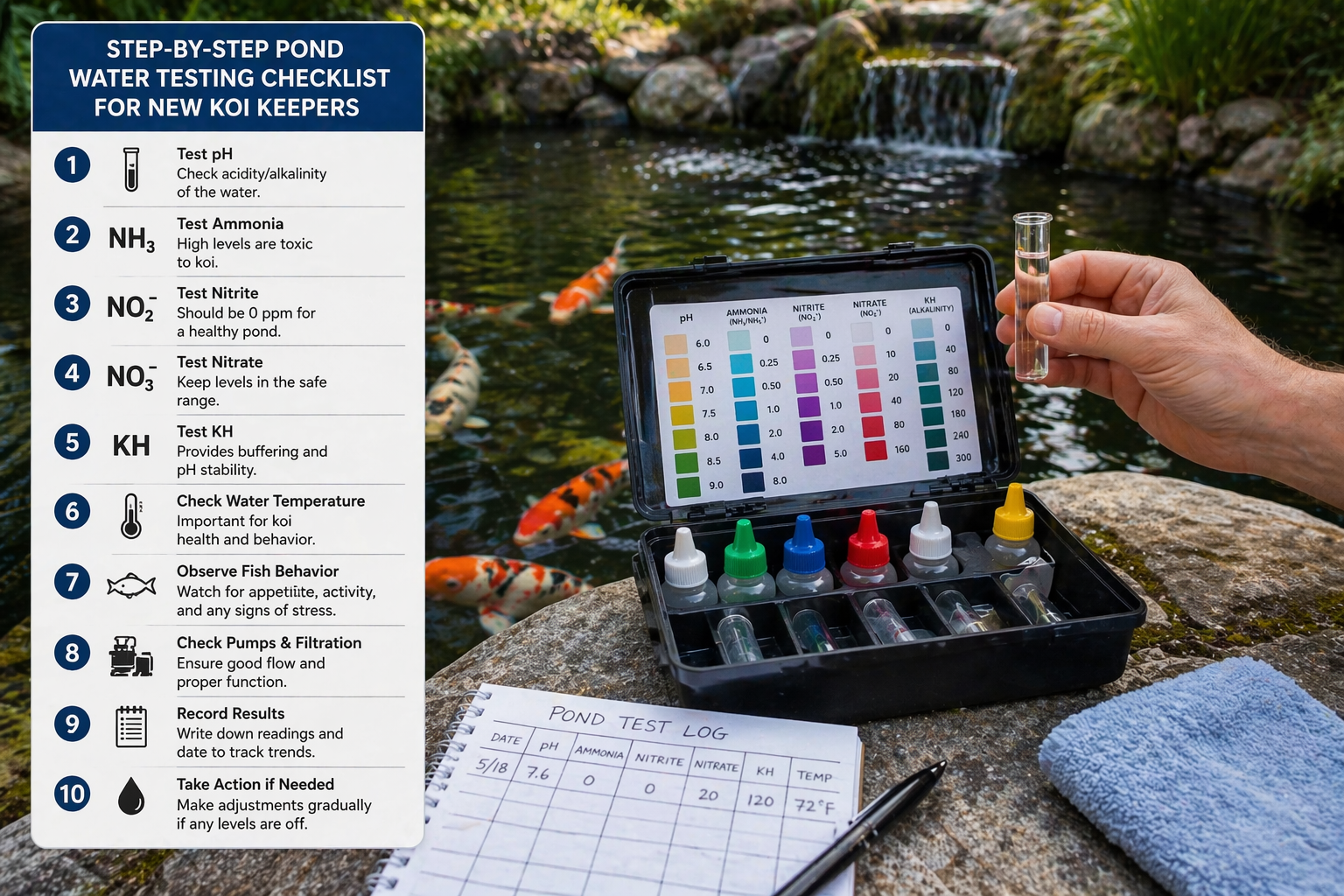
After the test kit is put away, watch the fish. Healthy koi usually give you useful clues at feeding time. Then look at the system itself. Is the water moving well? Is the aeration steady? Is debris collecting anywhere? Good pond care always combines the numbers with what the pond is telling you in real time.
Learning water chemistry can sound like a lot at first, though the basics are manageable once you build a rhythm. Test regularly, keep notes, watch your fish, and respond to small changes before they become big ones. That’s the foundation of better pond water quality and a steadier environment for koi.
For beginners, the best approach is simple: stay consistent, keep the pond clean, and don’t ignore the small warning signs. A healthier pond usually comes from steady care, not dramatic fixes. That kind of routine gives koi a better place to live and gives pond owners a lot more peace of mind.
Staying on top of water quality gets a lot easier when you’ve got expert support behind you. Fitz’s Fish Ponds offers professional pond water testing services that help take the guesswork out of routine care.
Instead of waiting for cloudy water, stressed fish, or filtration trouble, you can get a clearer picture of what your pond needs and when it needs attention.
With the right testing plan, it’s easier to keep conditions steady, protect your koi, and maintain a healthier pond through every season.
Learn more about our pond water testing services and get expert support for a cleaner, more stable pond. Talk to An Expert Online or call (908) 420-9908.
They’re the core readings that show whether the pond is safe and stable for koi. The main ones include pH, ammonia, nitrite, nitrate, dissolved oxygen, temperature, KH, and GH.
A stable pH around 7.0 to 8.5 is a common target range for koi ponds. Stability matters just as much as the number itself, and KH helps support that stability.
Weekly testing is a strong starting point for beginners and newer ponds. Extra testing is smart after adding fish, after storms, during heat, or any time koi behavior changes.
Ammonia, nitrite, pH, KH, oxygen, temperature, and nitrate are among the most important because they directly affect fish stress, waste processing, and pond stability.
Test regularly, avoid overfeeding, support filtration, maintain good aeration, remove debris, and make corrections gradually instead of all at once.
| Hours | |
|---|---|
| sunday | 10:00-5:00 |
| monday | 9:00-6:00 |
| tuesday | 9:00-6:00 |
| wednesday | 9:00-6:00 |
| thursday | 9:00-6:00 |
| friday | 9:00-6:00 |
| saturday | 9:00-6:00 |
| Hours | |
|---|---|
| sunday | 10:00-5:00 |
| monday | 9:00-6:00 |
| tuesday | 9:00-6:00 |
| wednesday | 9:00-6:00 |
| thursday | 9:00-6:00 |
| friday | 9:00-6:00 |
| saturday | 9:00-6:00 |
| Hours | |
|---|---|
| sunday | 10:00-5:00 |
| monday | 9:00-6:00 |
| tuesday | 9:00-6:00 |
| wednesday | 9:00-6:00 |
| thursday | 9:00-6:00 |
| friday | 9:00-6:00 |
| saturday | 9:00-6:00 |
| Hours | |
|---|---|
| sunday | 10:00-5:00 |
| monday | 9:00-6:00 |
| tuesday | 9:00-6:00 |
| wednesday | 9:00-6:00 |
| thursday | 9:00-6:00 |
| friday | 9:00-6:00 |
| saturday | 9:00-6:00 |
| Hours | |
|---|---|
| sunday | Closed |
| monday | 9:00-5:00 |
| tuesday | 9:00-5:00 |
| wednesday | 9:00-5:00 |
| thursday | 9:00-5:00 |
| friday | 9:00-5:00 |
| saturday | Closed |
| Hours | |
|---|---|
| sunday | 10:00-5:00 |
| monday | 9:00-6:00 |
| tuesday | 9:00-6:00 |
| wednesday | 9:00-6:00 |
| thursday | 9:00-6:00 |
| friday | 9:00-6:00 |
| saturday | 9:00-6:00 |
| Hours | |
|---|---|
| sunday | Closed |
| monday | 9:00-6:00 |
| tuesday | 9:00-6:00 |
| wednesday | 9:00-6:00 |
| thursday | 9:00-6:00 |
| friday | 9:00-6:00 |
| saturday | 9:00-6:00 |
| Hours | |
|---|---|
| Sunday | Closed |
| Monday | Closed |
| Tuesday | Closed |
| Wednesday | 9:00-6:00 |
| Thursday | 9:00-6:00 |
| Friday | 9:00-6:00 |
| Saturday | 9:00-6:00 |
| Hours | |
|---|---|
| Sunday | 10:00-4:00 |
| Monday | Closed |
| Tuesday | 10:00-5:00 |
| Wednesday | 10:00-5:00 |
| Thursday | 10:00-5:00 |
| Friday | 10:00-5:00 |
| Saturday | 10:00-5:00 |